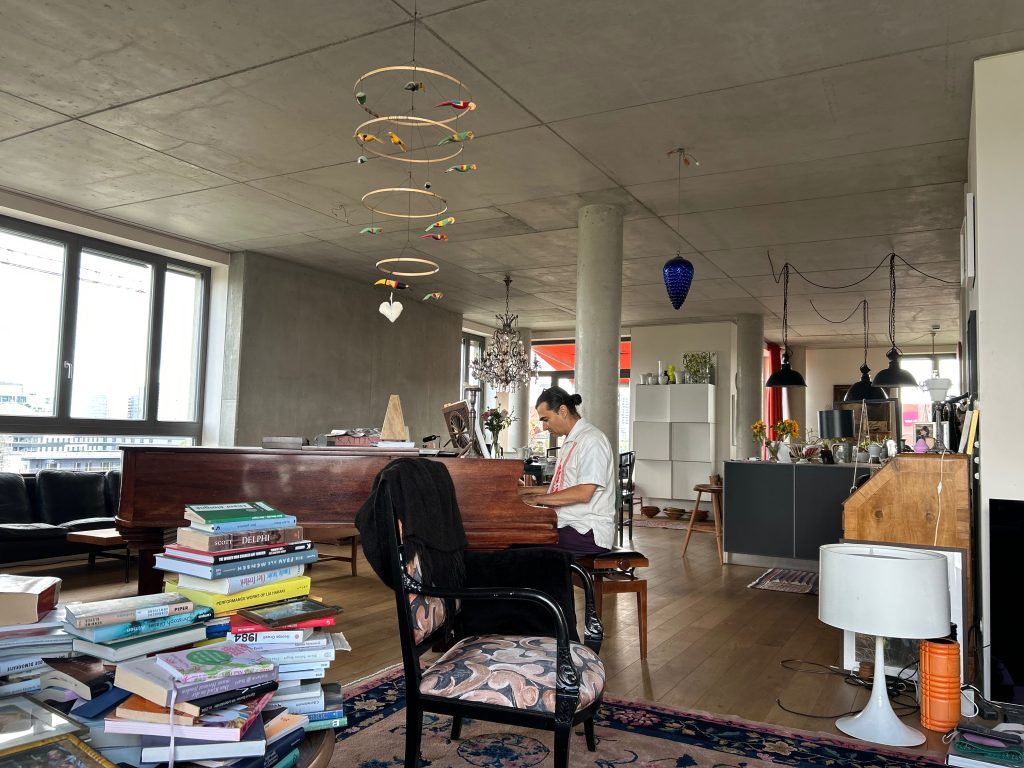
This morning I was woken not by the sound of a gong, but by the sound of a piano.
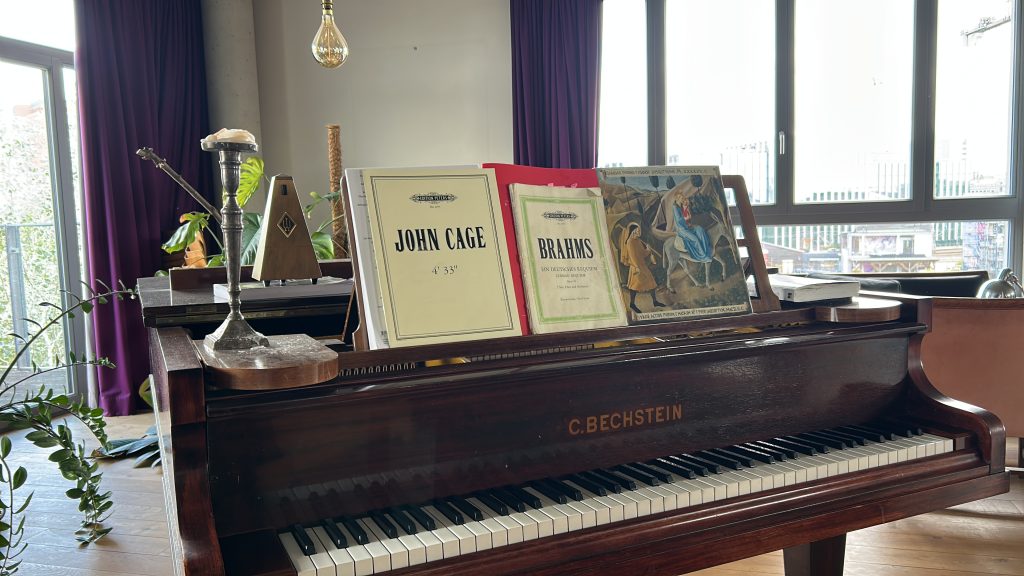
I came closer to the piano, where Jochen was sitting, with Brahms and John Cage standing in front of him. But what I heard did not sound like Cage or Brahms at all-it sounded so Jochen-like. It was his sound; it sounded like him.
Then I lay down on the sofa and looked at the sky through the window. It was a beautiful morning that colored my entire day.
Then the day began to unfold.
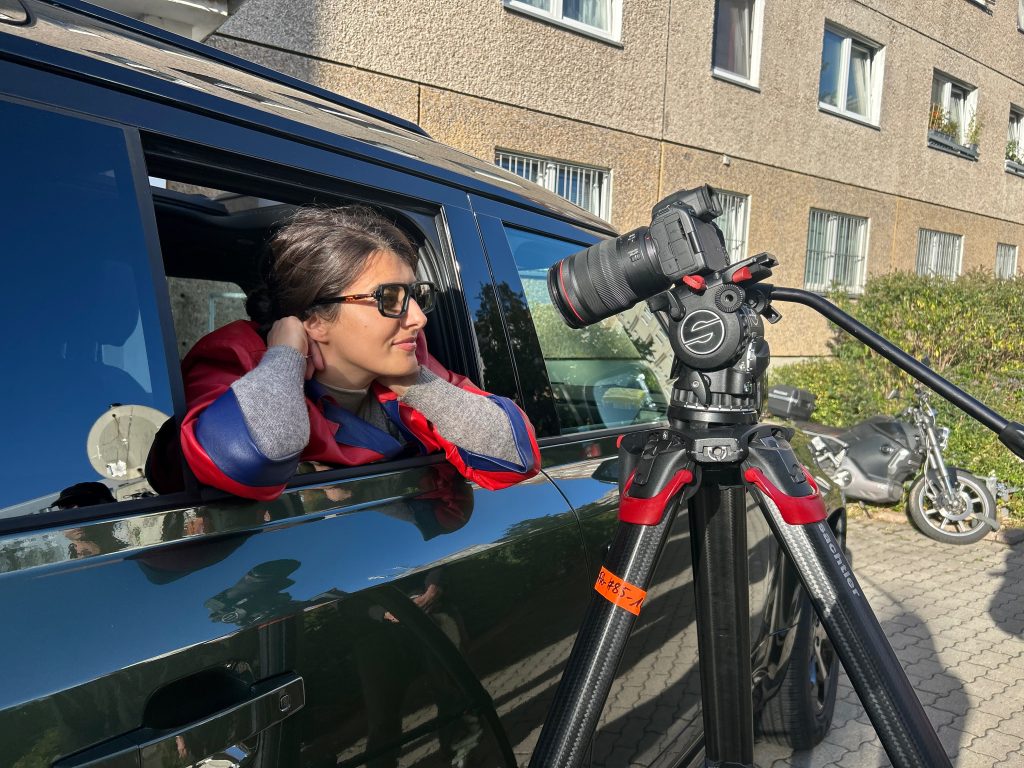
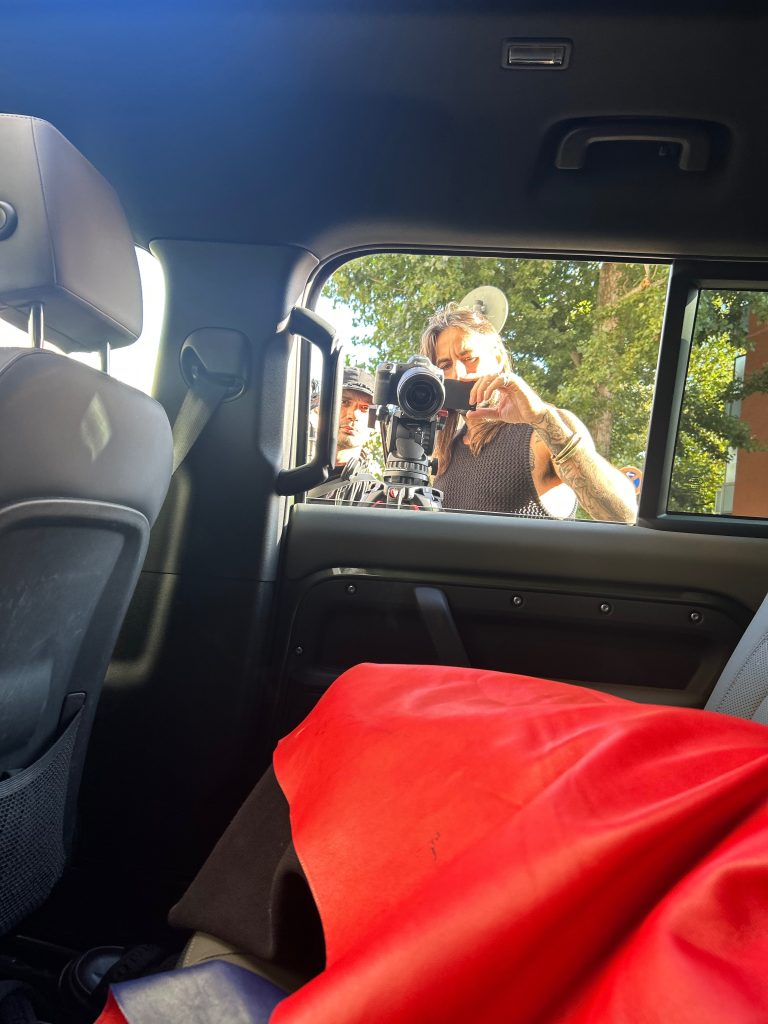
I went to the filming of the documentary about Kuboraum, for which Sergio had invited me, saying that he wanted me to be part of it. I told him that I don’t give classical interviews, but that within the documentary I could create a performance that would be horizontal and last 4’33” instead of me speaking. I wrote down the questions they had asked me while lying down, as Dani and his crew filmed, and Sergio drove through Berlin.
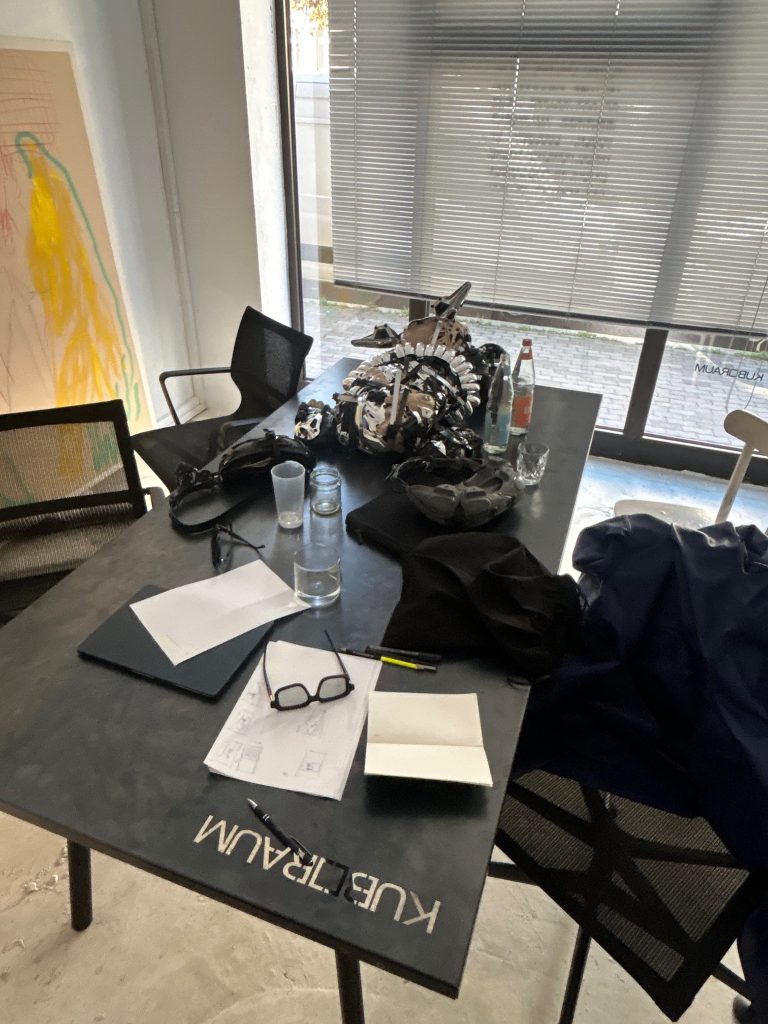
Then we finished filming, hugged each other very tightly, and Sergio said once again, at the very end:
“PAPI GUARDA
WHEN YOU ARE IN THE ROOM, SUN IS SHINING.
THANK YOU FOR EVERYTHING”
And then we hugged each other, and I told him, “Grazie per esistere.”
I got on a Lime and went to pick up Sasha and Jochen. Then we cycled to the Volksbühne together. Sasha was faster and arrived before us.
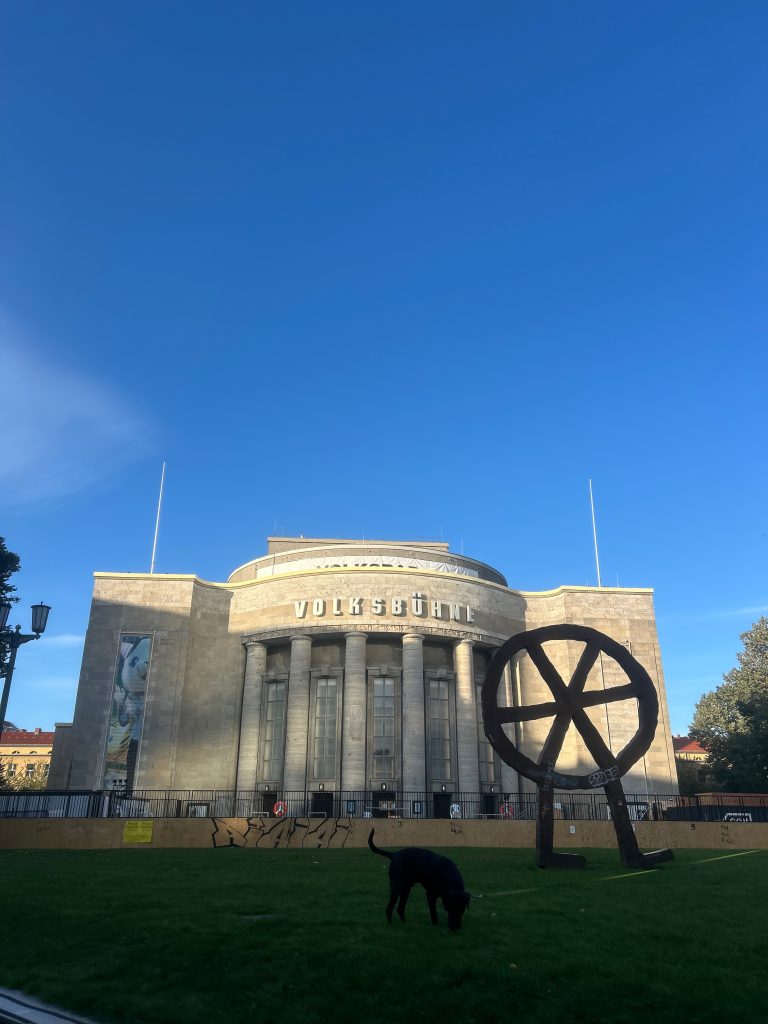
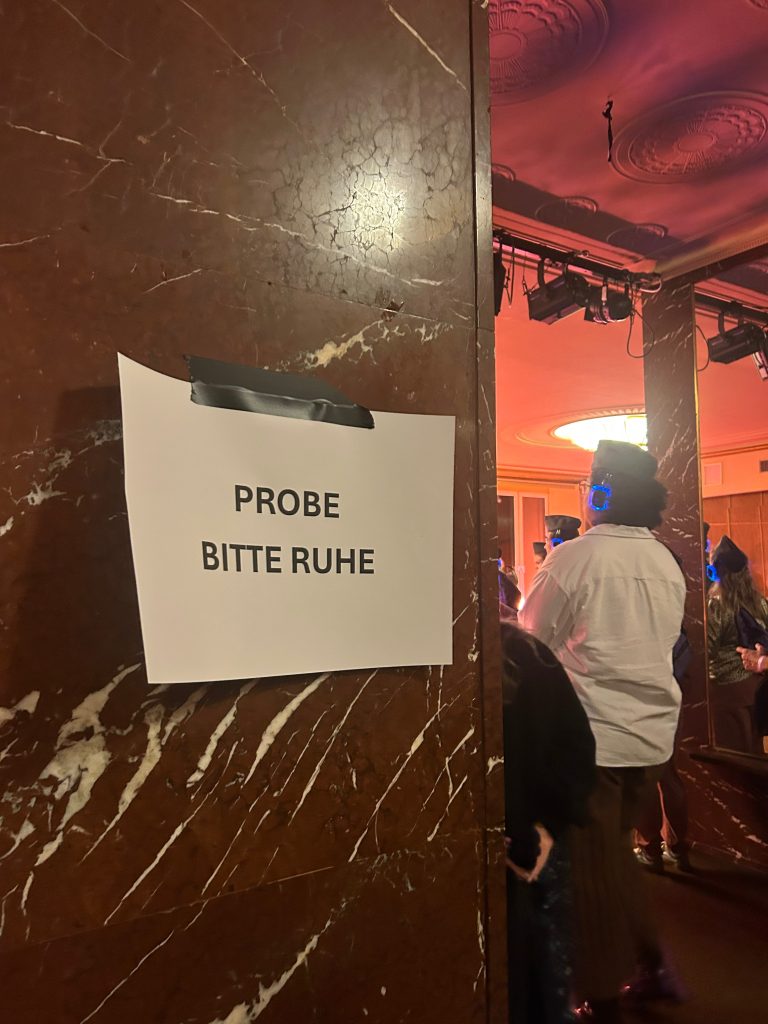
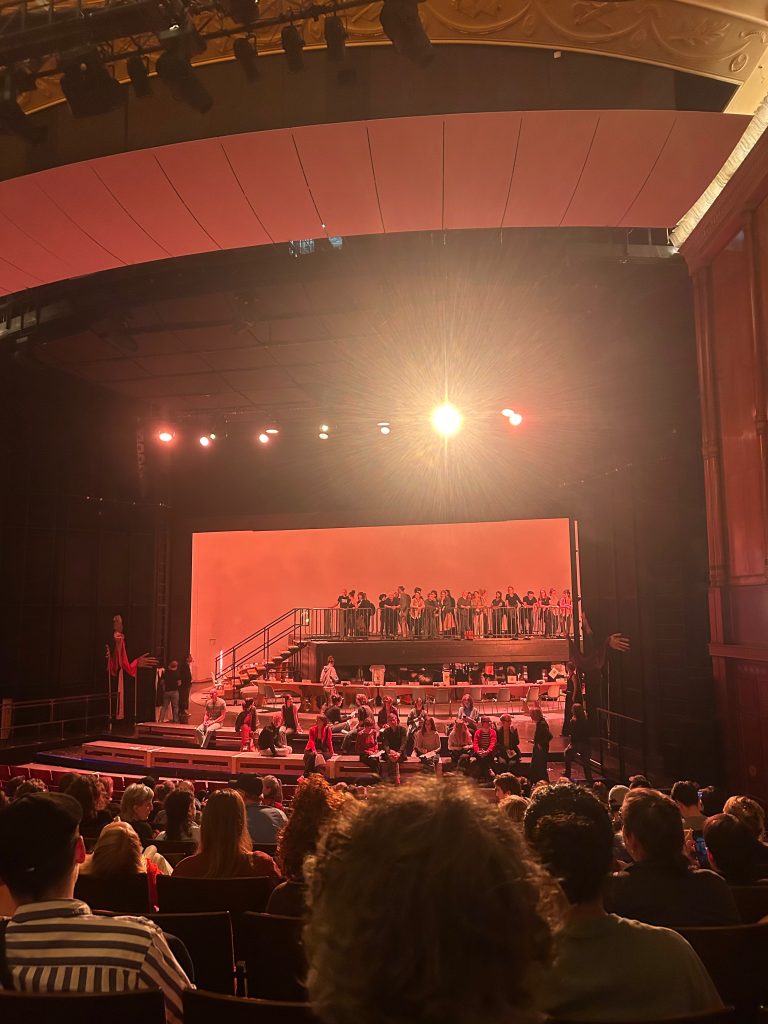
We entered the Volksbühne, which had been transformed into a HOUSE OF HOPE – a rehearsal by the director, Stefan Kaegi. We went inside and everything was scattered and confusing. Nobody knew where to go, but we saw that there were signs we were supposed to follow, and groups of people, each group with its own guide and headphones on their heads.
Somehow, we caught a rhythm and began moving through the House of Hope.
It lasted three hours. Jochen left before the end, while Sasha and I stayed until the very end. When it was over, we looked each other straight in the eyes, and Sasha said:
“THERE IS NO HOPE.”
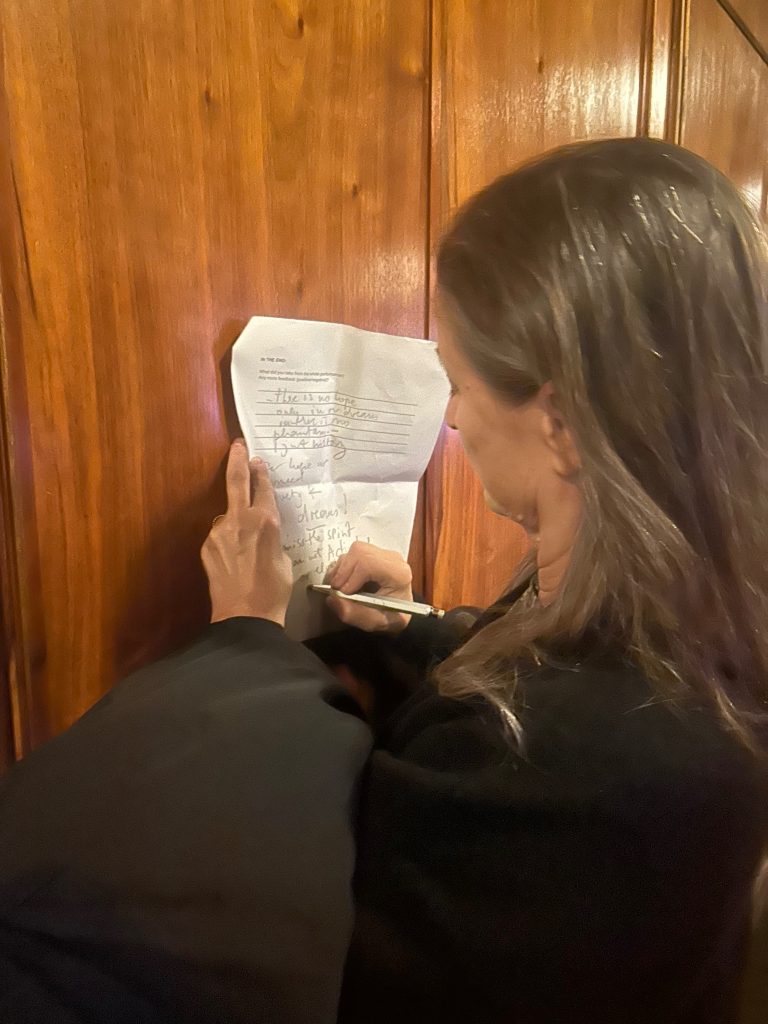
Then she wrote her impressions down on paper.
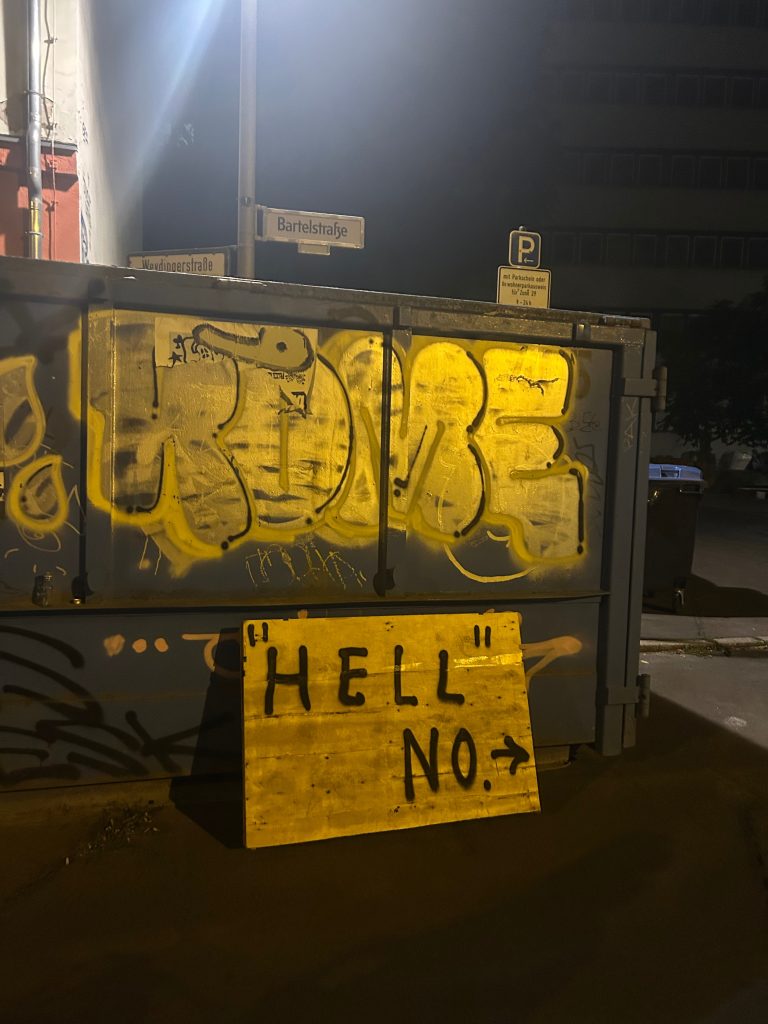
We left the Volksbühne and went across the street to a beautiful restaurant, but on the way there, just 150 meters from the Volksbühne, we came across a sign pasted onto a dumpster. It said:
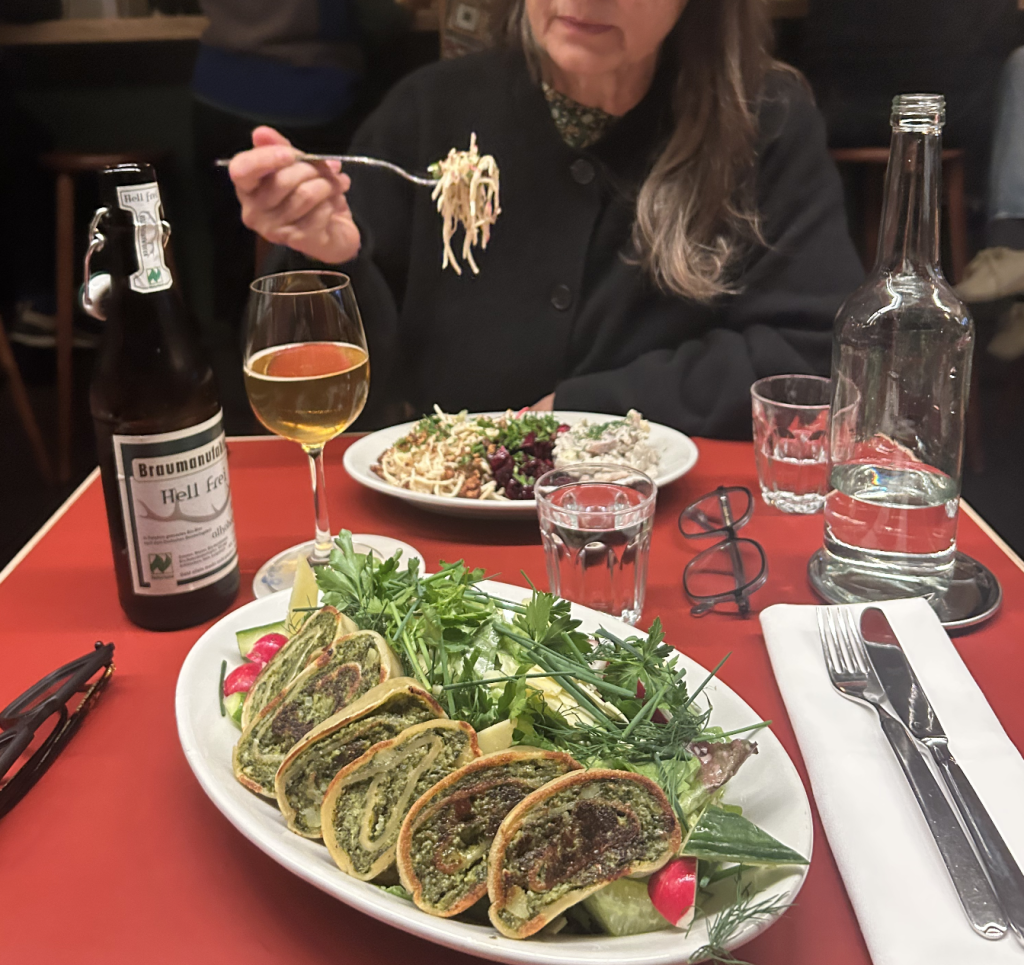
We stepped into a restaurant, that had the atmosphere and scent of coming home. We ordered some food, and everything was looking very hopeful. It looked even more hopeful when the waitress brought Sasha a beer with the words “Hell Frei” written on it. In English, it sounds like “free hell”, but in German, it actually means “free paradise” haha, so in the end, we called it our DINNER OF HOPE.
At the table beside ours, a young couple in love were sitting. They overheard us talking about House of Hope because, by coincidence, they had also been there that evening and had seen the same thing we had.
Sasha asked them very directly ” How do you feel now ? ” . They didn’t really know how to answer. They couldn’t quite name what they were feeling. Perhaps it was enough for them simply to be in love. They didn’t seem to need any other kind of hope beyond the love they had at that moment – a love none of us could know how long would last. We all hope, forever haha.
And then we continued our conversation about what we had spent the previous three hours watching and listening to. We came to the conclusion that the rehearsal had not lifted our spirits – and that this is precisely what each of us longs for in our own practices, in the work and art we create, each in our own way and language.
But we agreed that the most important feeling is precisely this: to feel that our spirit has been lifted, elevated, after experiencing a work we have watched or listened to. That, however, was not the case here.
I remembered a quote by Doald B. Marron that says:
“Good contemporary art reflects society, great contemporary art anticipates.”
We were bringing our DINNER OF HOPE to an end, and I asked Sasha when was the last time she had experienced something that truly lifted her spirit. She couldn’t quite recall it in that particular moment, but she said that it often happens to her when she listens to music or goes to concerts.
And then, as we were leaving on our bicycles, Sasha said that for hope, you need a dream – that you need to be capable of dreaming and that you need imagination.
https://www.volksbuehne-berlin.de/en/productions/house-of-hopes