I met Mila and Maja in front of Lupo Lupo Lupo Gallery in Milan.
We went inside.
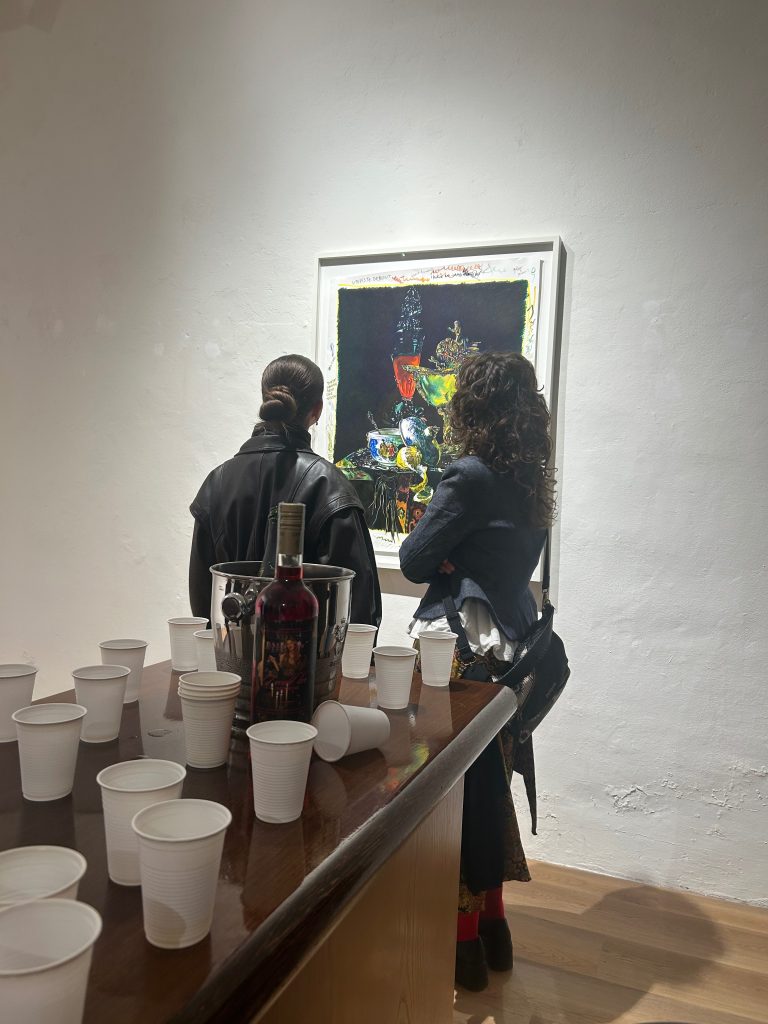
And once again, nothing happened to me.
I mean, everything on display was ok. I could see that the artist had enjoyed herself while making the work, especially since she was able to survive without someone, as the exhibition title itself says: I Could Live Without You.
I don’t know whether the she refers to alcohol, given the drawings of bars and bottles on the walls, or to the person who made the artist drink. This part remains a mystery. I know nothing about the artist or the exhibition. I couldn’t find the information, and besides, I didn’t want to read the curatorial text. I wanted something to happen to me without knowing the context.
But nothing happened to me. Again. A draft of air. A generality. Lights. People. Small Talks. Alcohol and cigarettes.
That’s why I started bringing my antar mouna practice – vow of silence, 4′33″, to every exhibition, every happening. A way of saving myself from small talk.
I bumped into Ross Farinotti again. She seems to be at almost every exhibition. We saw each other, and she was confused by my silence. She didn’t know about my antar mouna practice.
So I typed a message on my phone:
I can’t speak. I’m observing my 4′33″ vow of silence.
She understood immediately and said:
See you at Viafarini, in your studio. Text me.
Then I left the gallery.
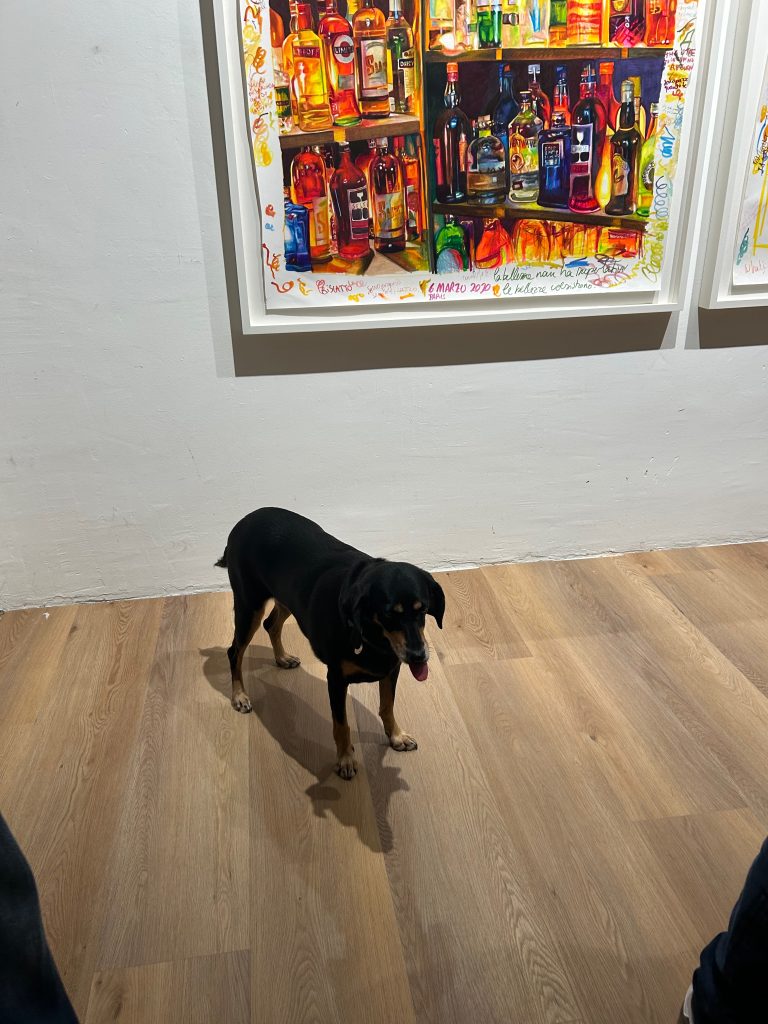
But, right at the exit of the gallery, there was one so sweet dog, just standing there. His face had that sleepy, bored look, as if he were waiting for his owner to come and find him. Or perhaps he was simply waiting for someone to offer him food or a hug.
I cuddled him or her. I don’t know what gender dog was, honestly, it doesn’t matter to me. What matters is the feeling. and ss I was cuddling that dog, his or her face reminded me of Francisco de Goya’s painting The Dog.
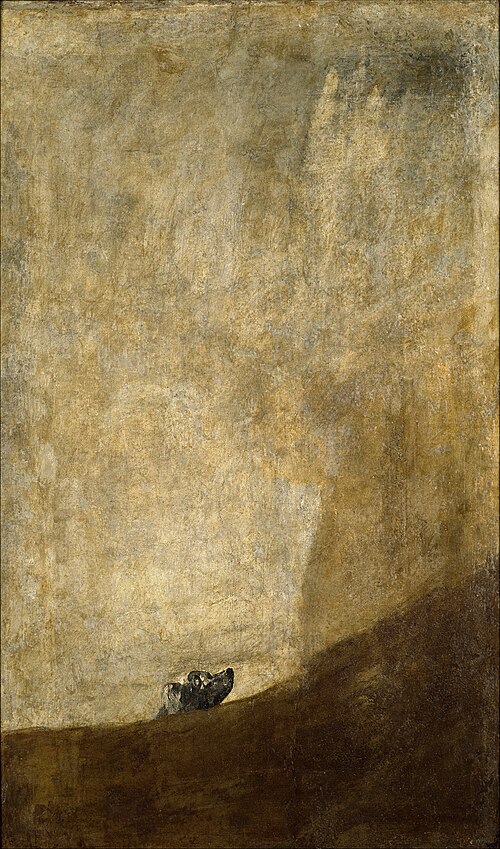
And immediately, another reference followed: Anne Carson and the lecture she gave at the Museo Nacional del Prado in Madrid, a lecture about Hesitation, in which she quoted Rilke and his observation of a dog.
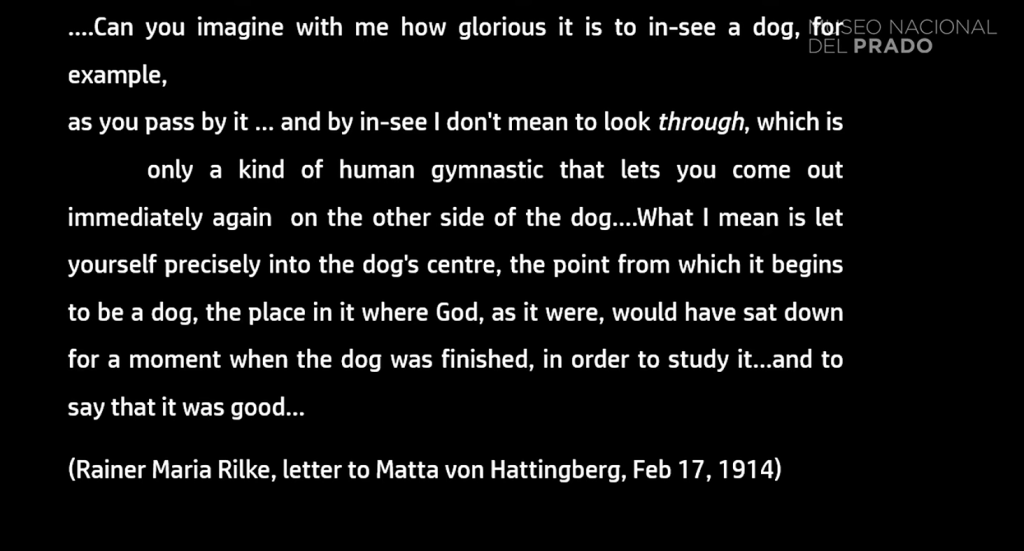
That was the most moving moment of the entire exhibition, for me. The encounter with the dog.
Then I thought to myself:
Will someone please save me from the boredom of the Milan art-scene desert?
Or is the only possible salvation to save myself? Perhaps that is the most realistic option.
Whenever I go to a happening of any kind, and it fails to raise my temperature or alter my perception, I begin looking for something else. I search the surroundings. I watch. I listen. I look sideways, beyond the thing I have supposedly come to see.
This time, I noticed the works in the courtyard, happening alongside the exhibition. Some kind of reconstruction of the building’s architectural elements, outside the gallery walls.
There was earth. An enormous bulldozer.
Honestly, this touched me more than anything I had seen inside. I’d like to believe that this installation is part of the exhibition, but I doubt it. Because the plastic cups in the cement cart were identical to the ones inside the gallery. Which made me wonder: was this the carelessness of exhibition visitors, leaving their plastic cups wherever they pleased, or was it part of the exhibition?
Perhaps Marcel Duchamp, if he were still alive, could have given me the correct answer.
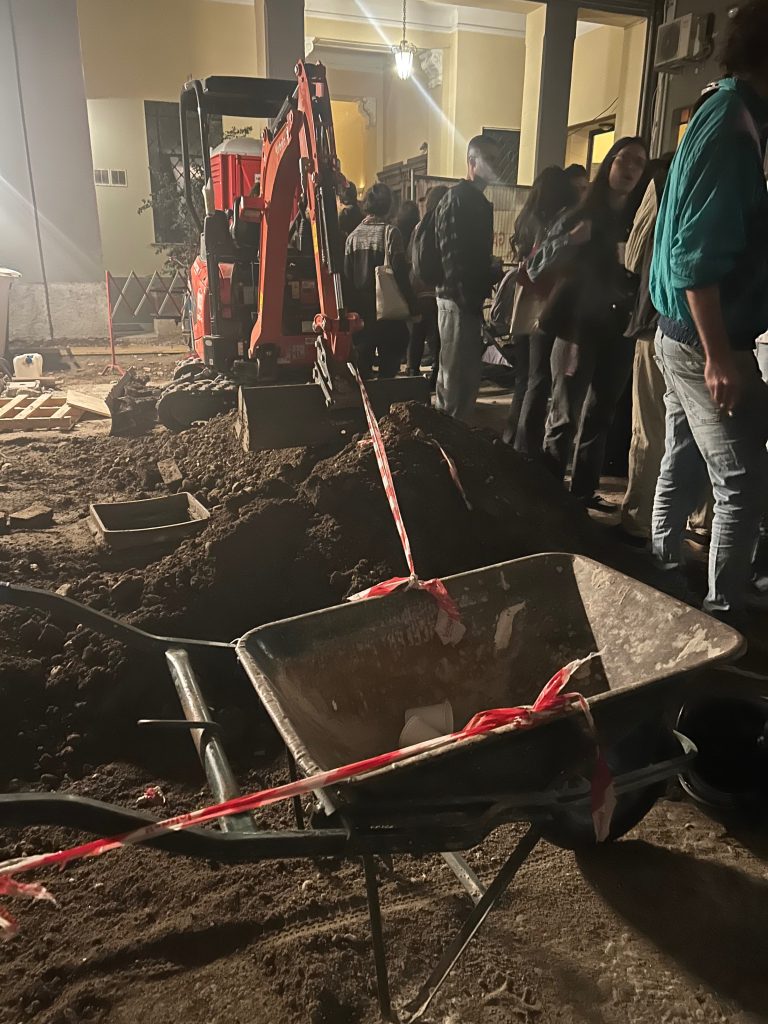
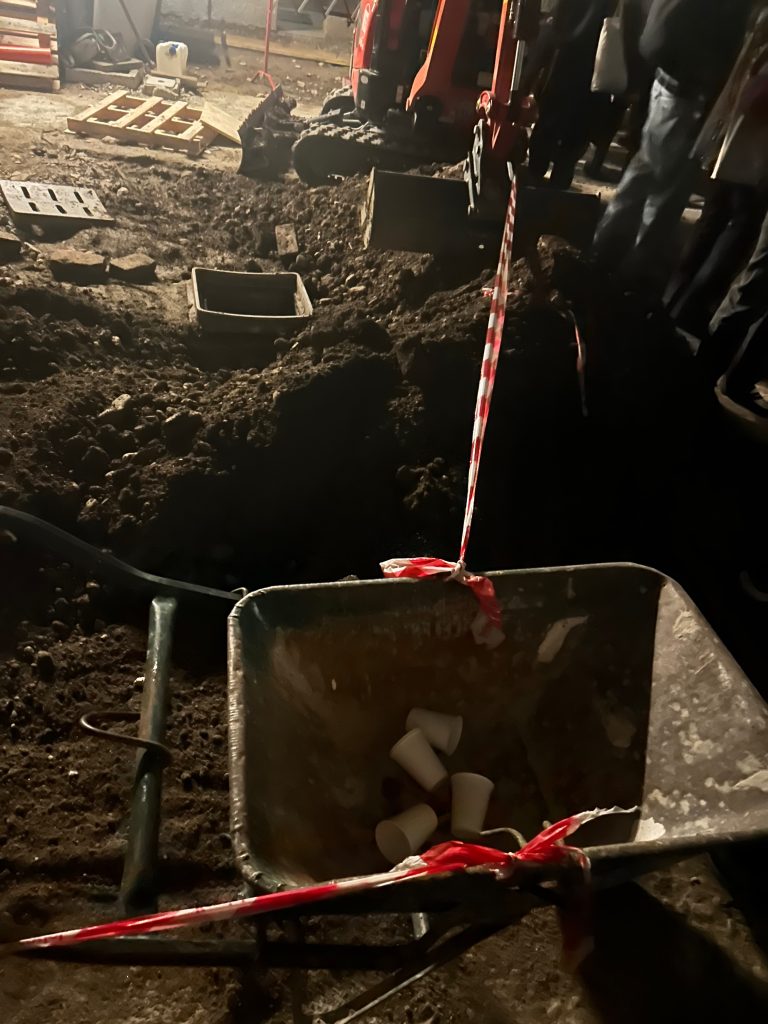
The earth and bulldozer, reminded me of Adrián Villar Rojas and his imposing installations, which never leave me indifferent. Something always happens when I encounter his work.
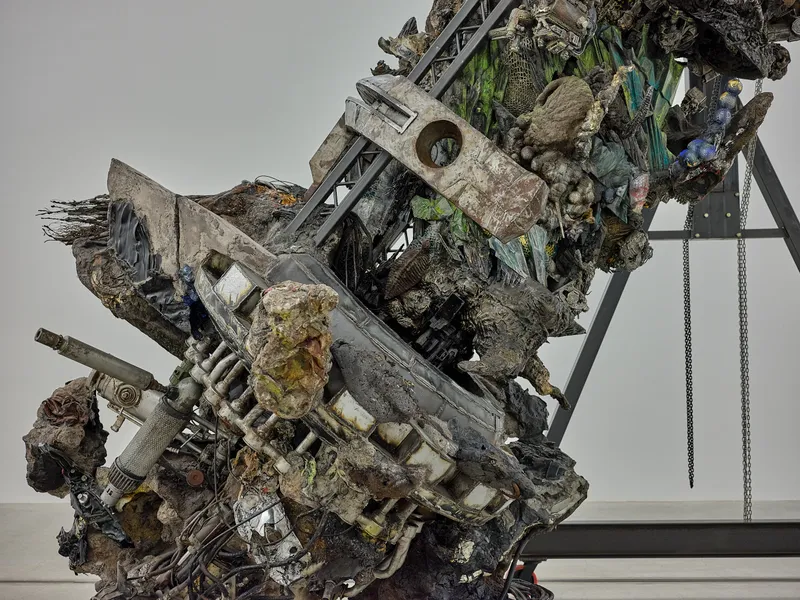
An internal displacement. A small tectonic event. The feeling that something inside me has been moved from its assigned position.
Later, Maja and I performed an Ocean Fingers practice while Mila watched us.
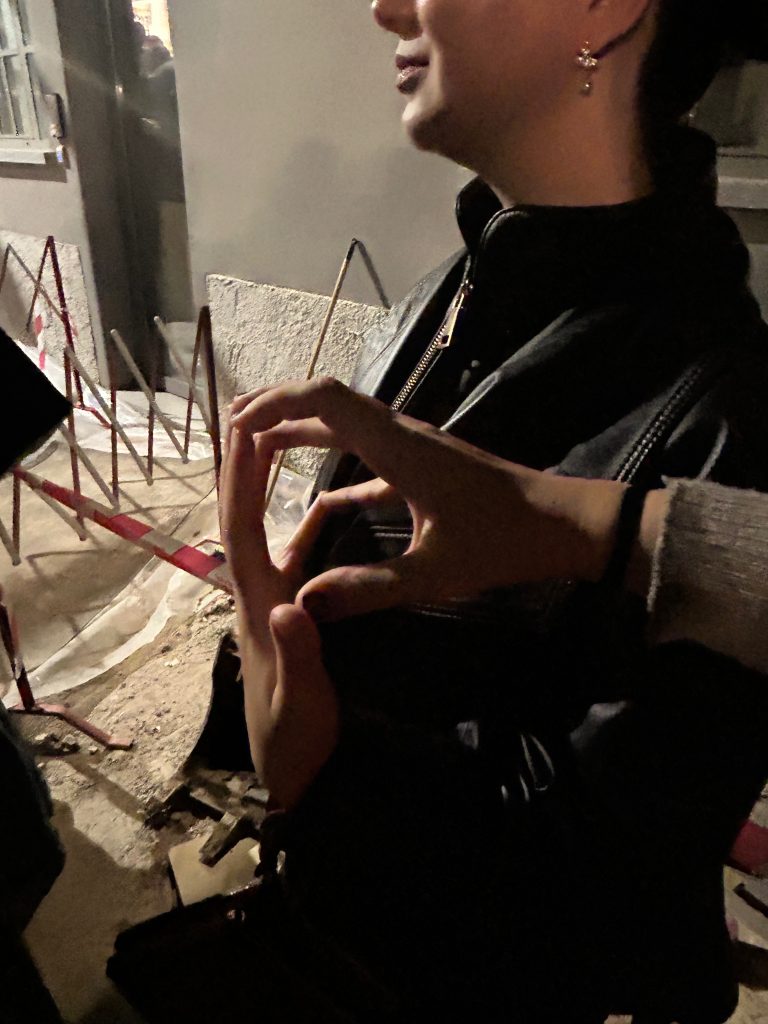
Then I gave Maja the keys to my Viafarini residency. We were close to my studio, but I went home to sleep. Maja and Mila, I imagine, either went to the studio or ended up at some Chinese karaoke bar in Chinatown.
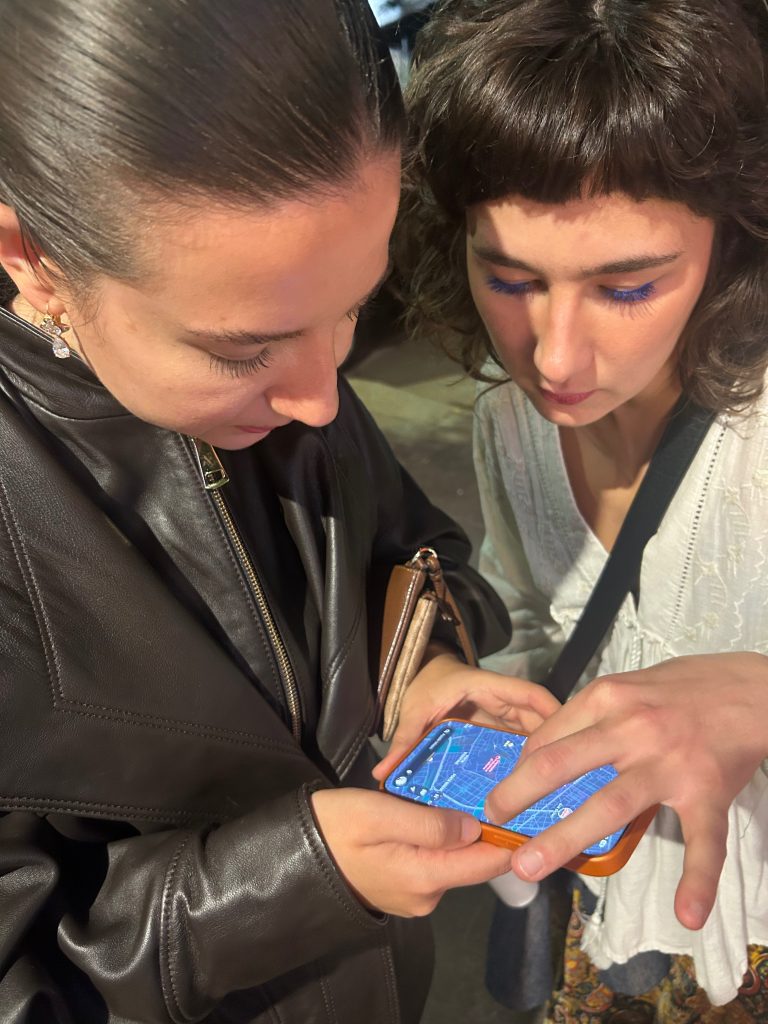
The evening, like most evenings, continued somewhere else.
Perhaps the art was there all along.
Just not where the invitation told me to look.