In the morning Davide Allieri and I said: Yes. We go together.
Then Francesca Milani wrote. Come at six. Afterwards La Scala at eight.
So Milan began to divide itself into hours.
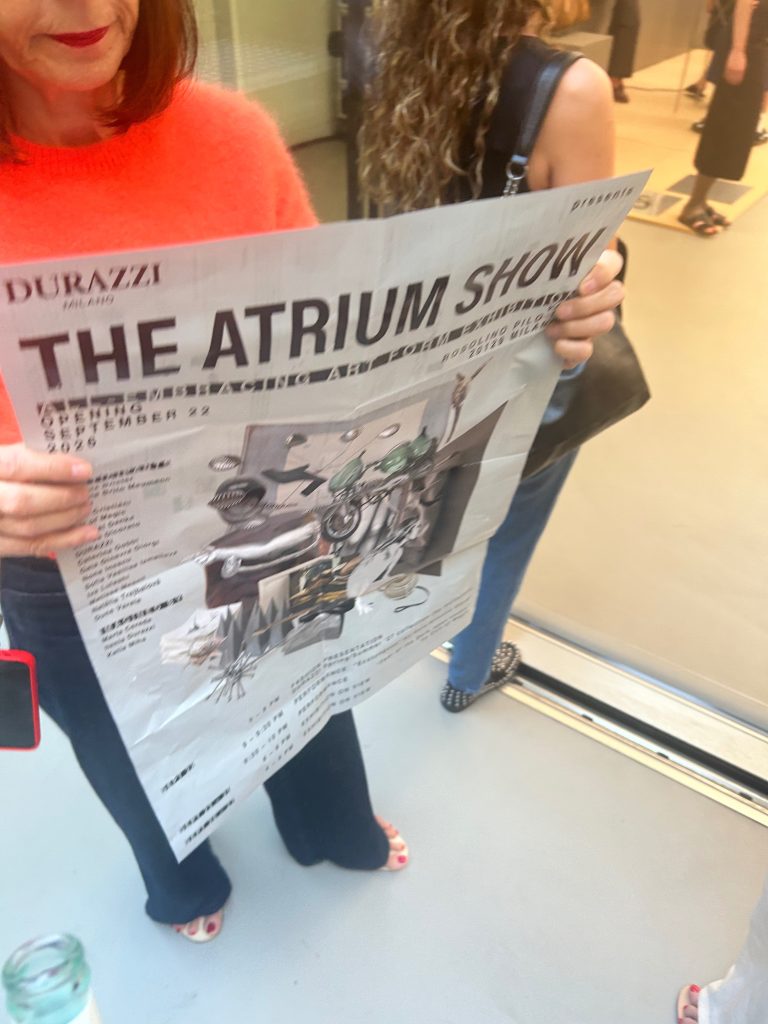
6:00 – Durazzi Atrium.
8:00 – La Scala.
9:00 – Durazzi Atirum, again.
A city is perhaps just a body with several clocks inside it.
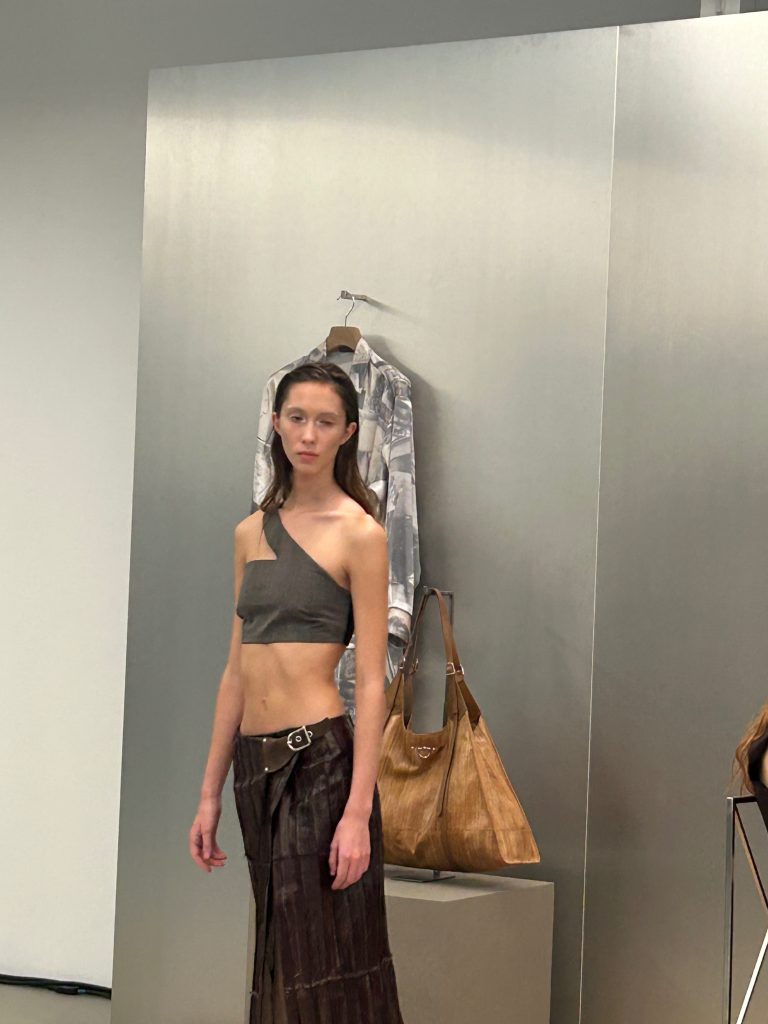
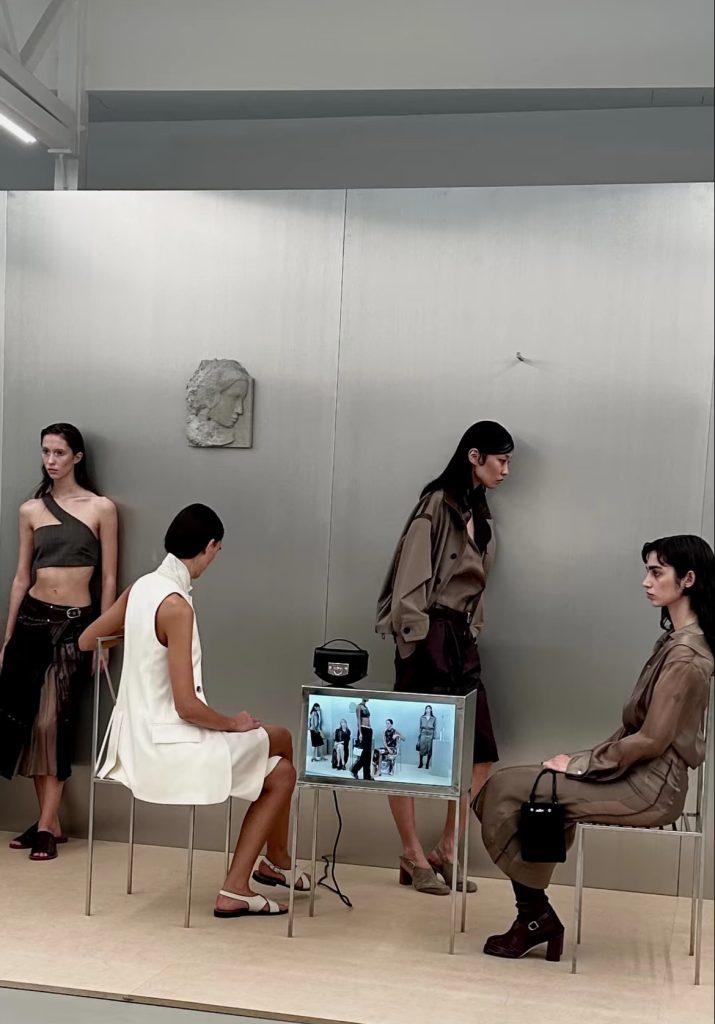
At Durazzi there were about ten bodies.
Moving.
Standing.
Sitting.
Walking.
One slow sculptural adagio, almost largo.
On the metal screen: Déjà Vu.
Contrappunto.
I like repetition.
Repetition is one of the few things I trust. Something repeats and because it repeats it begins to change. Or perhaps we begin to change. The same thing is never the same thing after the fifth time. What disturbed me was the noise of people. Too many voices. The small talk accumulating around us, all those unnecessary words, going nowhere.
The noise of humans around human bodies.
Then, Ema Stefanovska arrived. My Macedonian girl from the Cyclades. She smelled like a forest. She brought solar zenitism from the Cyclades, having landed in Milan just two hours before she arrived at Durazzi Atrium. We were happy. There are people whose arrival changes the temperature of a room.
This is different from fashion. Or perhaps it is fashion.
Davide was late. He would come later.
Then, almost immediately, I spotted Dušan Đurković and Toni.
At first I didn’t recognise them. They looked so elegant, so sensual. Toni was wearing dark Givenchy glasses, and Dušan was dressed head to toe in Durazzi.
I love seeing them. Especially like this – completely dressed, completely themselves. They seem like such a harmonious couple. I love Dušan and Toni because they are kind and generous. And I love that whenever we meet in Milan, we return to our native languages.
Then Vito Vicino swept into the atrium like a fury, carrying all his charisma and beauty with him. I was happy to see him. I love Vito’s vital energy as if his name had already decided it. Although I missed Santi beside him. I ran into Santi a little later. I have forgotten what Santi smelled like. But I remember Vito’s scent because it reminded me of Comme des Garçons Avignon. But it was not Avignon in Milan.
At 7:45 I left.
But just before I left the atrium, I bumped into my intergalactic husband.
His birthday was September 21.
I said: Happy Birthday. Route 66.
Herpes, again. On his lips.
I have SOS lip balm and L-lysine for you. That’s what I said.
He behaved as if he were under a heavy dose of the anesthetic the dentist injects into his jaw, the kind that leaves your mouth unable to open: The words were ready. The mouth was not.
A small medical failure
of communication.

Outside my carriage was waiting. Lime bicicletta. I love when Lime waits for me. When I leave a place and the bicycle is simply there. Like a small obedient horse. The green horse knows where I am. I do not.
Ten minutes later:
Duomo.
Police.
Barricades.
Milano Fashion Week.
Vogue.
Humanity in its ceremonial state.
I abandoned the horse.
La Scala.
I entered.
Left box.
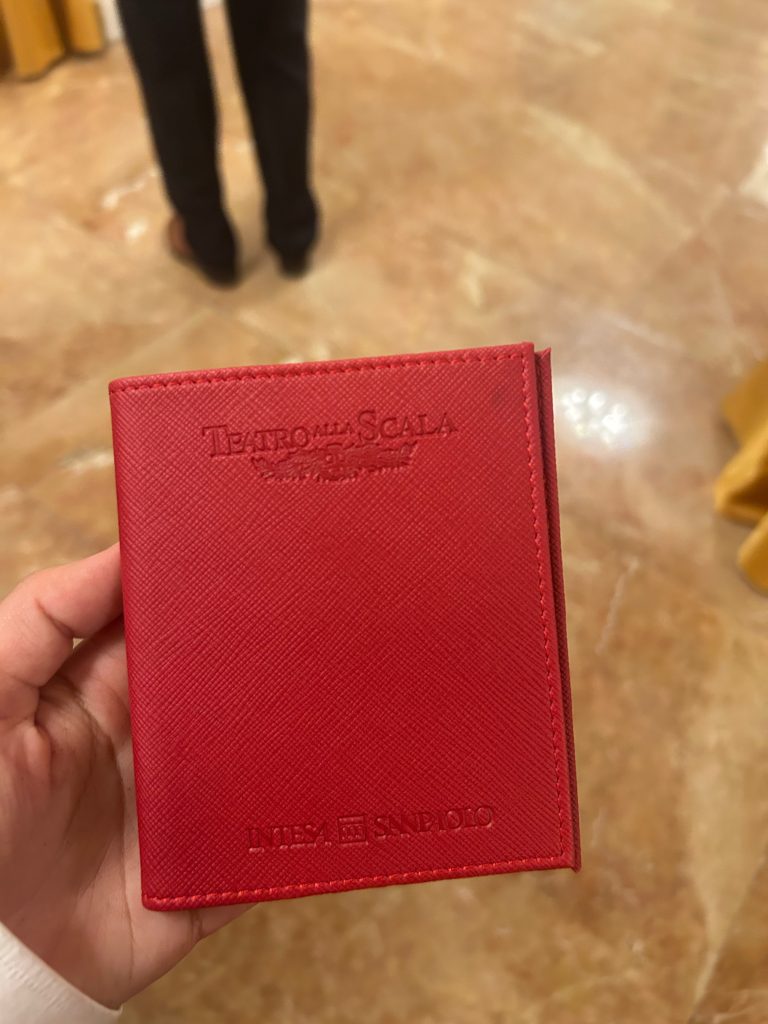
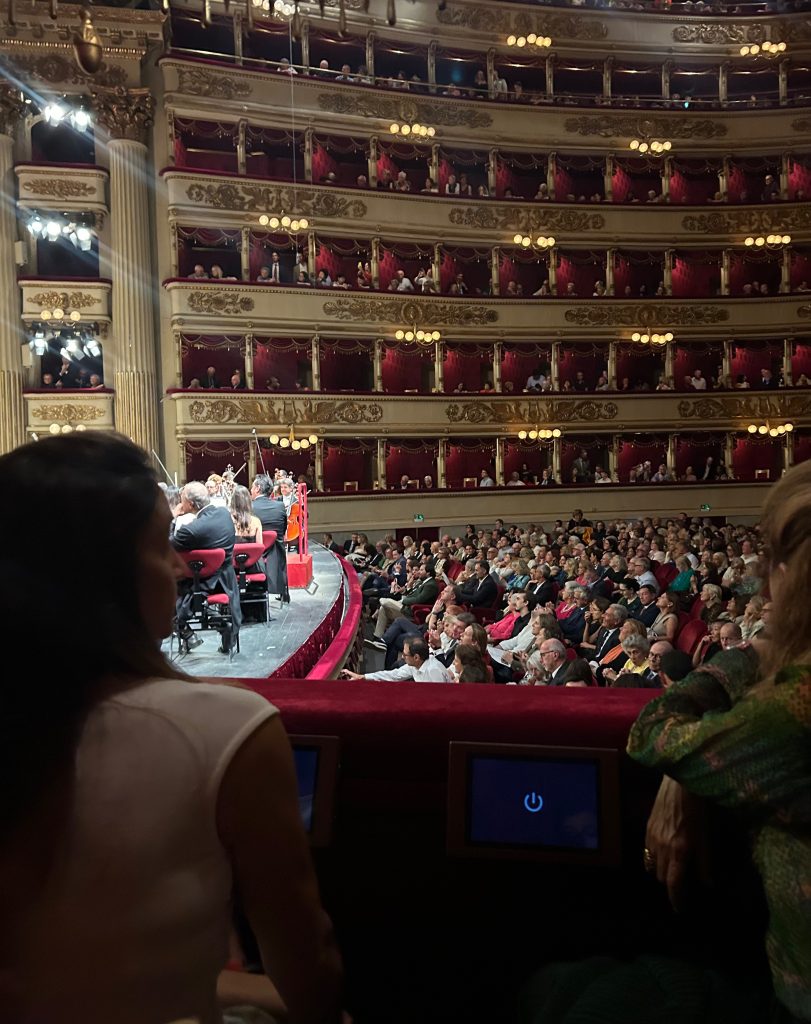
Orchestra immediately beneath us.
Anna.
Maria.
Francesca’s beautiful women.
I sat.
Closed my eyes.
Brahms.
Rustioni.
Academic Festival Overture, op. 80
Schicksalslied, op. 54.
I let the orchestra enter.
There is a moment when music stops being something you hear. It becomes something that happens to the interior of the body.
Then interval.
Drinks.
People.
Francesca’s friends.
More women.
Beautiful, kind, intelligent.
I think perhaps this is what happens when one person has a certain quality: the quality reproduces itself socially. People gather around warmth, around intelligence, around spirit, or around some combination for which we have not yet invented a word.
20:50 o’clock. Again I leave. Again I search for the horse. This time the horse is not there.
Police.
Barricades.
Circles.
Map.
Lime.
Ride.
Via Rosolino Pilo 14.
I bump into my intergalactic husband at the entrance, again.
He calls me: Kooky wife. I calls him: Intergalactic husband.
In Milan we are strangers. On Hydra we are married.
There was no meeting. No decision. No document. We simply began. A marriage on Island. A disappearance in the city. In Milan, we pass each other, like passing by a Turkish cemetery. On Hydra, we belong to each other. Intense proximity. Intergalactic.
Then Davide.
I had not seen him since last year. I said: I forgot how beautiful you are.
He laughed.
I lost twelve kilos, this is what he said.
But I don’t know why the body must explain itself. I saw beauty. That was enough.
Then Gaia Ginevra Giorgi.
Ecotongues.
This was not a performance. It was a sonic situation. A situation knows when to stop.
Twenty minutes or less. It was great. Her resonant voice spilled through the atrium, like Canens in Ovid’s Metamorphoses.
Then:
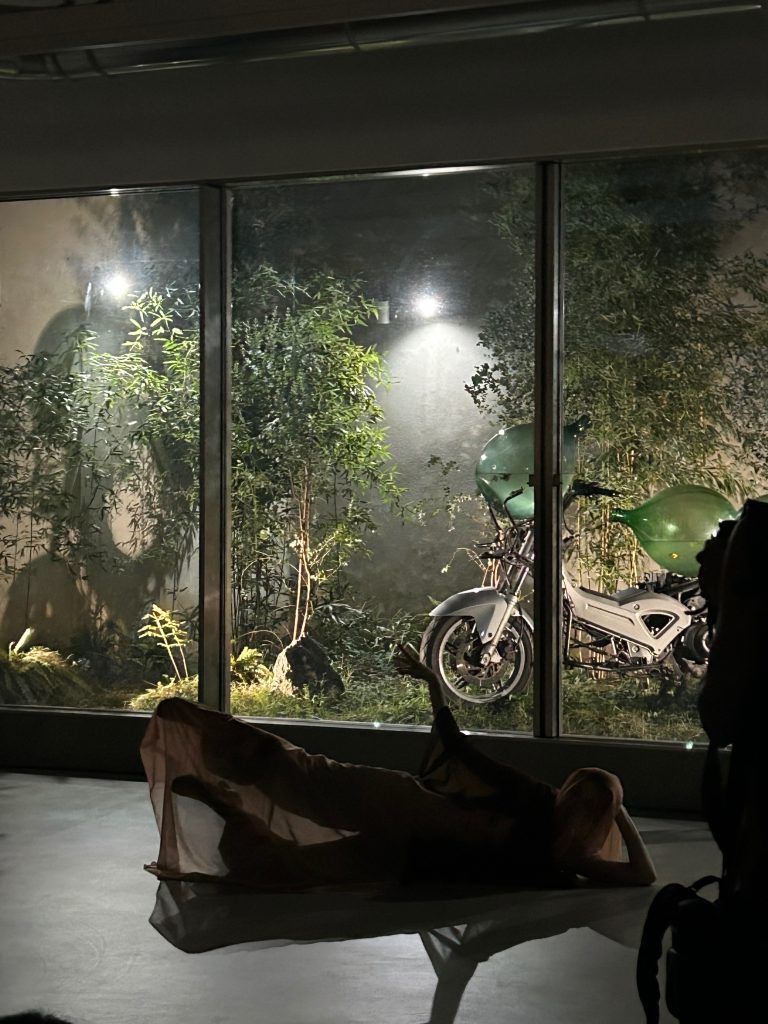
Fear of the Dark.
Cult of Magic.
I waited. Twelve minutes.
Nothing.
Light.
Fog.
Body.
Exercise.
Where is the magic?
The title had promised it. Nothing happened. Or perhaps something happened which did not reach me. This distinction matters. A few days earlier Sasha Waltz and I had come out of Stefan Kaegi’s House of Hope at Volksbühne. We looked at each other. Untouched. And I thought: perhaps this is the opposite of art.
Not ugliness.
Not failure.
Indifference.
Because art, when it works, changes the temperature. You enter carrying one weather. You leave carrying another. Not necessarily better. Just different. Something has entered. Something has shifted its chair inside you.
The exhibition was excellent. I detected many references in the works on display. I like good references. A good theft even more.
I see something good, I steal it immediately, and make it my own. That’s what Ingmar Bergman said.
The poetics of Caterina Gobbi’s work touched me and stayed with me the longest of the entire show, especially because it brought back the feelings I had when I first encountered Céleste Boursier-Mougenot’s sound installation From Here to Ear.
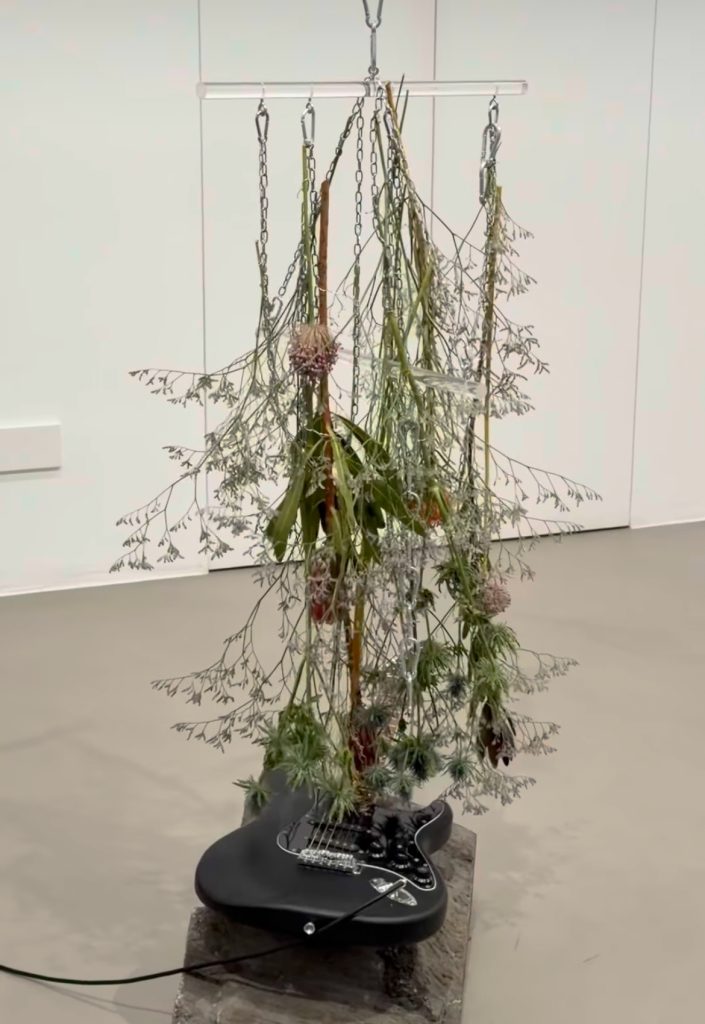
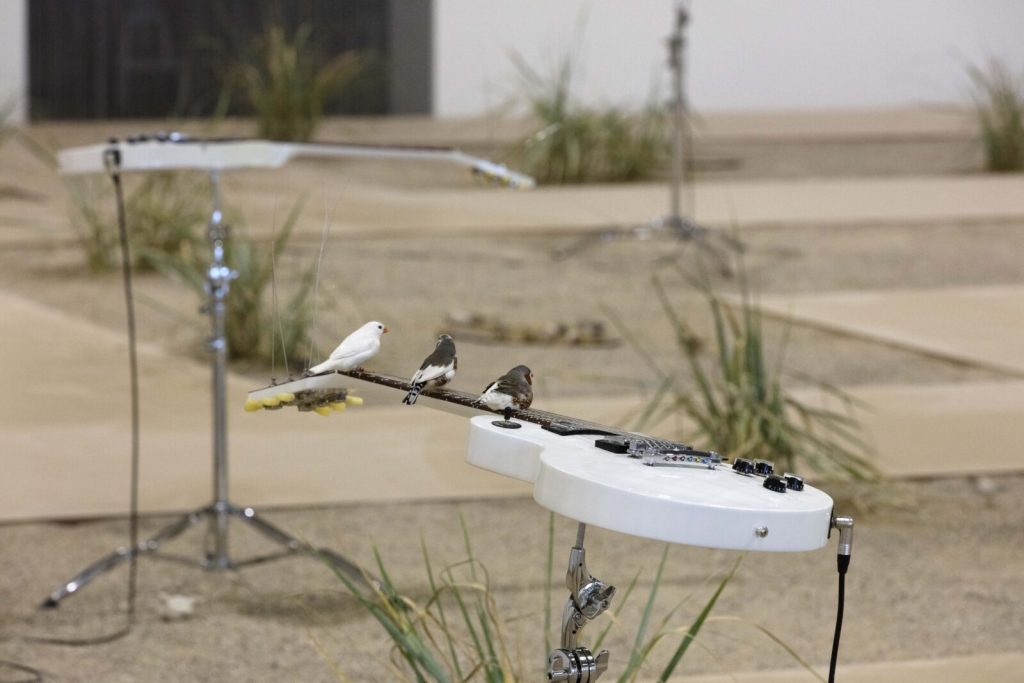
Marta Cereda.
Ilenia Durazzi.
Katia Miha.
Lucia Cristiani very poetic, Nona Inescu too.
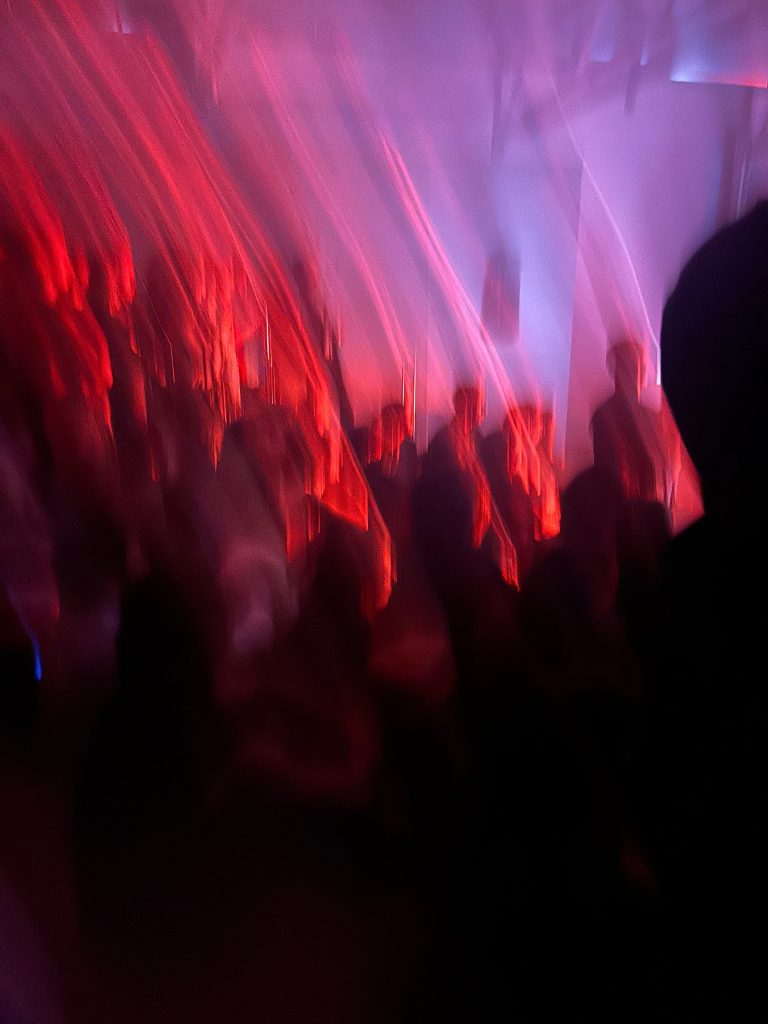
Then halfway through the performance Fear of the Dark, Davide looked at me. I looked at him. No words. We knew. Go.
Outside we leaned against a stranger’s orange car. And talked about art. About experience. Which is another way of saying: we talked about our inner worlds without having to say it.
We talked about Pierre Huyghe and about Locus Solus by Raymond Roussel.
I had mentioned the book to Davide before. Because his work reminds me of that world. His sculptures, his strange autonomous universe. A world which seems not to have asked permission to exist. How long does it take to arrive at yourself?
First you have to notice that you have a self.
Then you have to be devoted to your intuition, and to have the courage to follow where it leads you.
Then you have to make it visible.
This last part is difficult.
We spend twenty years learning technique. Then perhaps twenty more learning how to forget it. Not because technique is useless. Because technique can become a cage precisely when it becomes perfect. You learn the grammar. Then one day you must make a sentence nobody taught you. Perhaps this is the real education. Learning. Then unlearning.
sometimes, It takes you a long time to sound like yourself, that’s what Miles David said, forty years ago.
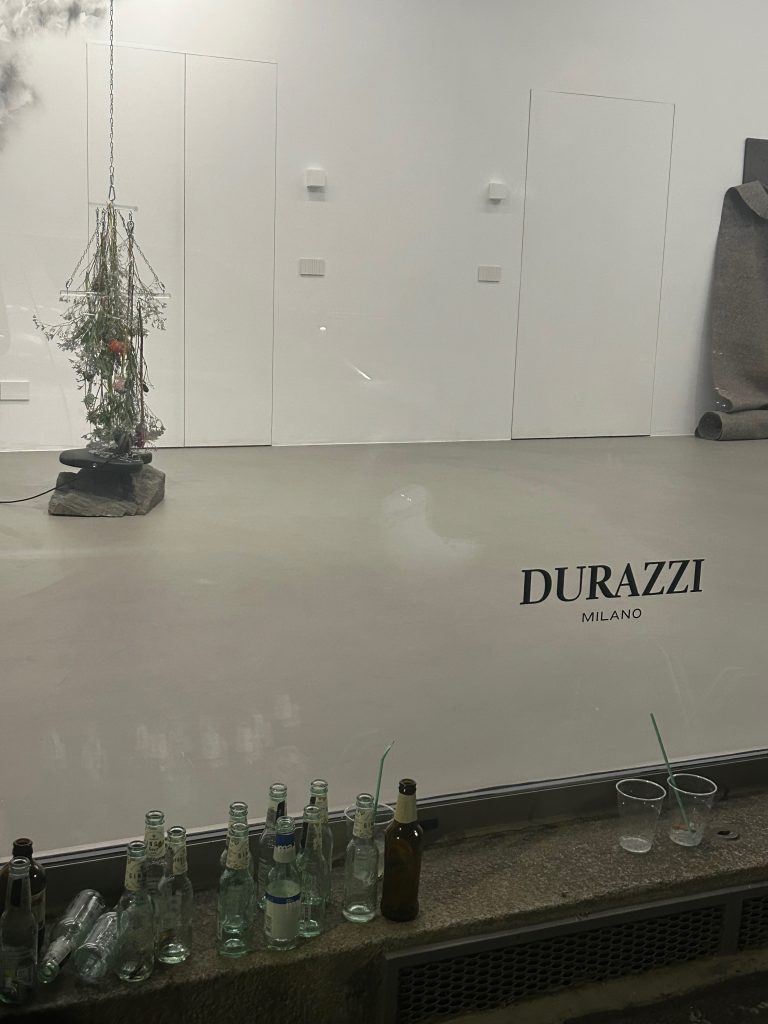
Durazzi sounds like herself.
Durazzi has a language.
Precise.
Sophisticated.
Polished.
Controlled.
A very complete language.
There is discipline in it.
And beauty.
The clothes are intelligent.
The construction is exact. Every detail has been considered. Every line knows where it is going. Nothing is careless, and very little is left to chance.
There is something almost ascetic about such precision.
It produces its own kind of beauty.
Cold, yes.
But cold is not the absence of beauty.
Ice has beauty.
Water has beauty before the sun touches it.
Durazzi knows this.
There is pleasure in restraint.
There is eroticism in distance.
There is something beautiful about a woman who does not explain herself.
You can admire Durazzi immediately. I did.
But admiration is not enough, admiration is not warmth.
I prefer the temperature.
I was waiting for something to move from the clothes to the body, and then from the body to the heart. It didn’t.
I kept waiting for warmth around my heart. Nothing.
And then I thought of Julie Kegels. Because of a temperature. I’ve known Julie for years. So I know something about the temperature behind the clothes.
Antwerp Six, now seven, but more intimate.
Kegels has intelligence too, but it behaves differently.
There is wit.
There is vulnerability.
A slight disturbance in the perfection.
Warmth.
Particularity.
Memory.
Something escapes the idea
and becomes alive.
Durazzi gives you perfection.
Kegels gives perfection a pulse. I was waiting to feel some pulse in Durazzi.
Less architectural. More wayward.
Something slips through.
A gesture that wasn’t completely disciplined.
Unequal ratio.
Levity.
Mischief.
A vulnerability.
The clothes seem to know the body is not a neutral surface.
The body has appetite.
It sweats.
It remembers.
It falls in love.
It rises in love.
It gets bored.
It wants to be touched.
This matters.
Because fashion can become so intelligent it forgets what intelligence was for. The body, meanwhile, keeps being a body.
Durazzi does not make that mistake exactly.
Durazzi makes something more difficult: a world so coherent that you begin to wonder whether you are allowed to disturb it.
Kegels lets you disturb it. Maybe that was what I was looking for, and then, during the Durazzi show, I thought of Kegels.
Not imperfection. That would be too easy.
Permission.
The permission for a garment
to exceed its own idea of perfection.
To let something escape the construction.
A tremor.
A mistake that is not a mistake.
I had been thirsty for that moment, when perfection loses control of itself.
Not collapse.
A pulse.
Something small enough
to be almost invisible, but impossible to mistake once you feel it.
I like cold water.
The clarity of it.
The shock.
But cold water is not where I want to stay.
I just happen to prefer the sun.
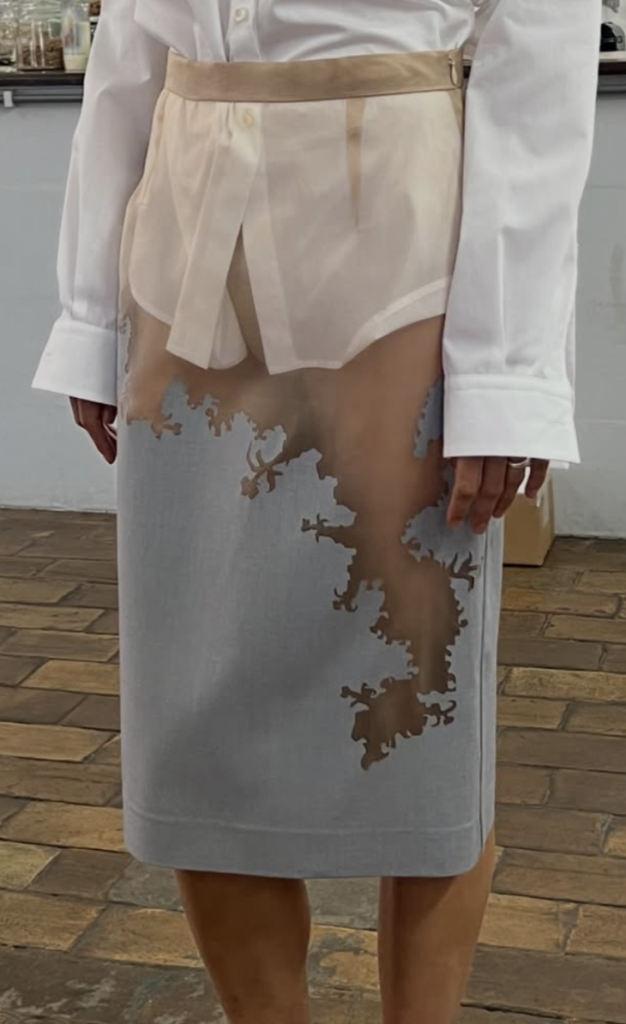
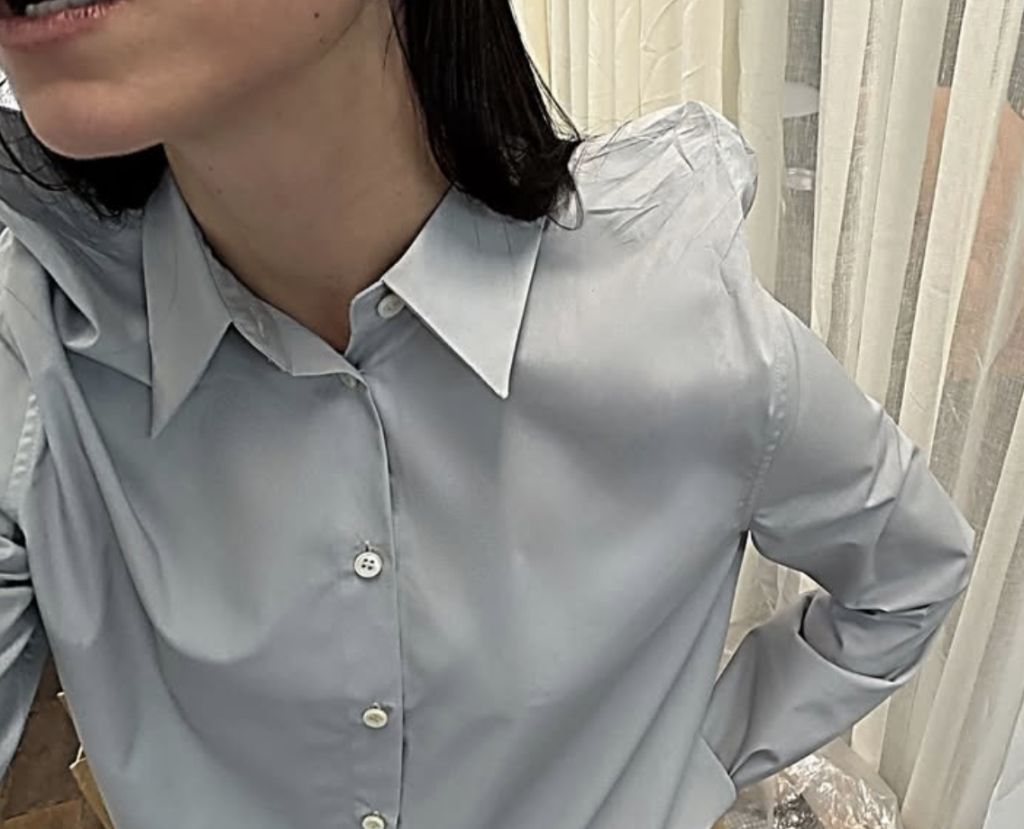
With Kegels, something remains.
With Durazzi, the world remains.
The room.
The light.
The bodies.
The people.
The noise.
Everything. Except the clothes.
This is strange. Because clothes are supposed to be the part that survives.
Not the room that held them.
Not the light that touched them.
Not the bodies that passed through them.
The clothes. Or so memory tells us.
A line should remain somewhere in the mind.
A shoulder.
A particular length of black.
Something the eye can carry home.
But when I try to remember Durazzi, my mind refuses the clothes.
It gives me the room.
Then a woman.
Then the legs.
And suddenly I am no longer at the show. In my mind I am back in April, 2025. One random encounter. A woman walking past. The boots remain. This is the strange part:
The garment I remember is not the garment I was shown. It belongs to another time. Another accident of seeing. Maybe this is what fashion cannot control. The eye does not archive according to the designer’s intentions. It makes its own collection. It keeps what it wants. It discards the rest. And sometimes what survives is not the new dress, but an old pair of boots on a woman you happened to see one night in 2025 on Via Senato 10. It was Ilenia itself. Ofequestrian High Boots on her well-proportioned legs, can’t get out of my head.
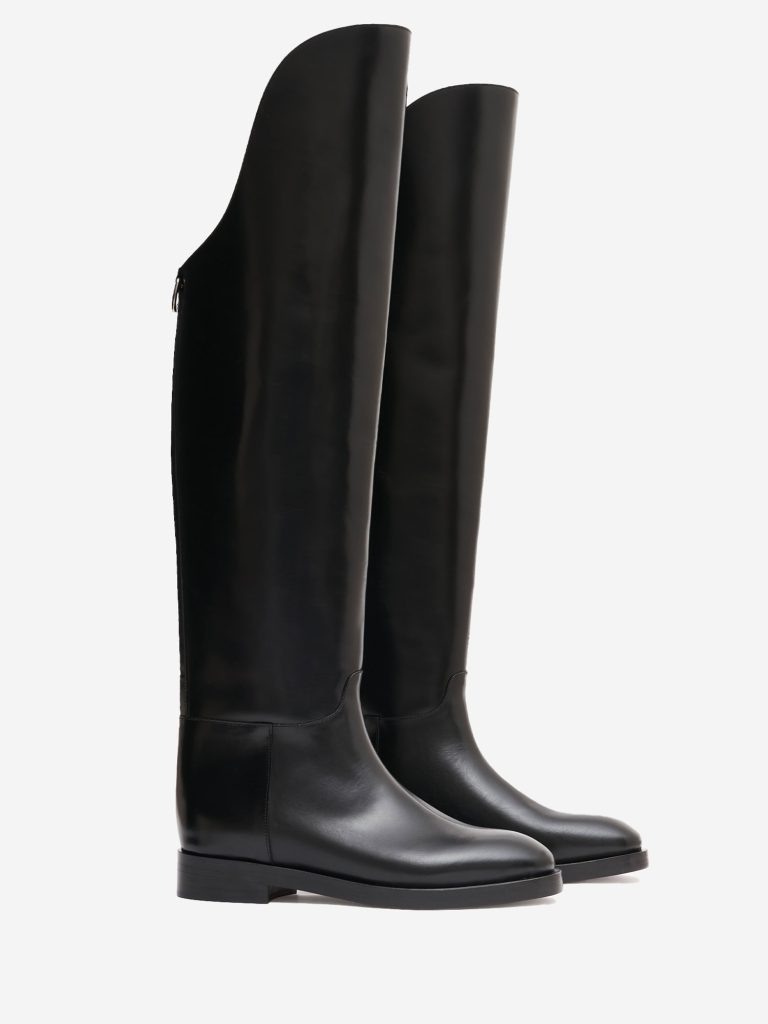
Not the dress.
Not the show.
The boots.
The legs.
The accident.
Art is what makes man something other than an accident of the universe, that’s what Andre Malraux siad. I keep thinking about this.
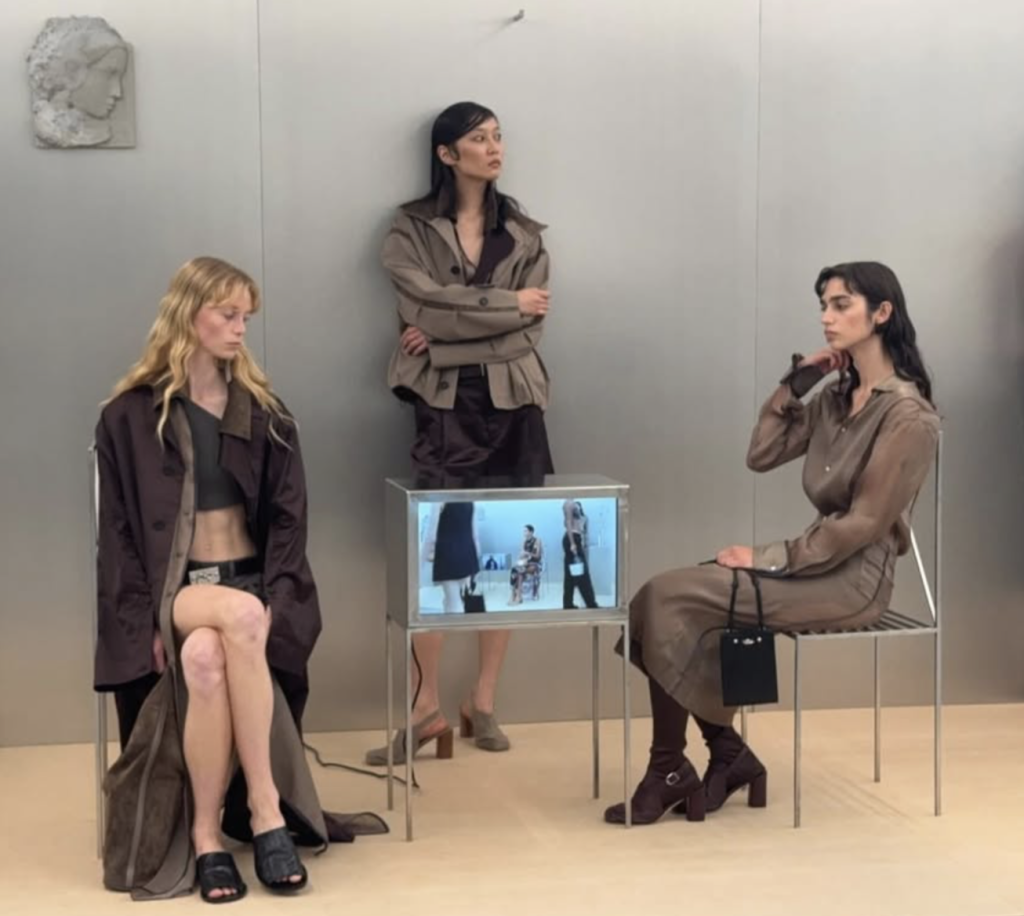
SS’27, perhaps the clothes were too successfully absorbed into the image. Perhaps they became atmosphere. Perhaps fashion disappears when it behaves too well inside its own world. Or perhaps there was just an absence of spirit there.
Memory is a brutal editor. It does not care how many hours were spent cutting fabric. It does not care about the seam.
The fitting.
The construction.
The intelligence.
Memory asks only:
Did you touch me?
If not:
deleted.
This may be unfair. But memory has never claimed to be fair. It keeps what touched it. It throws away the rest.
So I wonder: was there nothing there for memory to hold? Or perhaps I’m developing dementia.
Maybe Durazzi has warmth. Maybe I simply have not found the instrument to detect it.
Maybe Durazzi has a sun inside her world which has not yet reached me. This is possible. I don’t know yet. What I know is only this:
I remember the world. Elegant in its coldness, like Parian marble.
I cannot remember the wardrobe.
and then – the sky.
I looked up from the Durazzi Atrium. The sky had an improbable splendor.
It touched me.
Towards the very end, Ross Farinotti arrived.
Davide siad Ross knows everyone in Milan.
So I asked her:
Ross, do you like rakija?
Ooooh, yes, she replied to me.
Then you are like rakija, you connect people. Thats what I said.
We laughed. It seemed true.
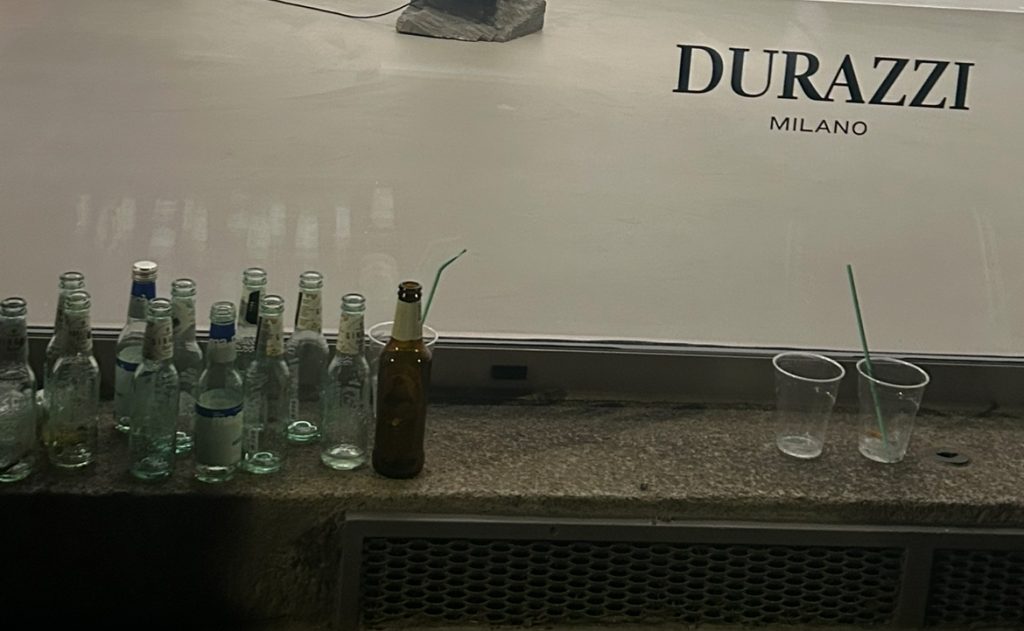
After all that effort:
the bodies,
the clothes,
the performance,
the fog,
the light,
the noise,
the conversations,
the art pieces,
the opinions,
the music,
the barricades,
the Lime horses,
the beautiful women,
the husbands who become strangers,
the strangers whose cars become chairs –
the sky.
The sky did what I had been asking fashion to do. It changed the temperature. Not dramatically. Just enough. A little heat around the heart.
And perhaps that is what I wanted all evening.
Not just beauty.
There was beauty everywhere.
I wanted something beyond.
Something to remain.
The sky remained.